Meet Shelley
Know yourself.
Become yourself.
A gentle, spacious, and deeply human space to listen inward, soften what no longer serves, and make room for what matters.
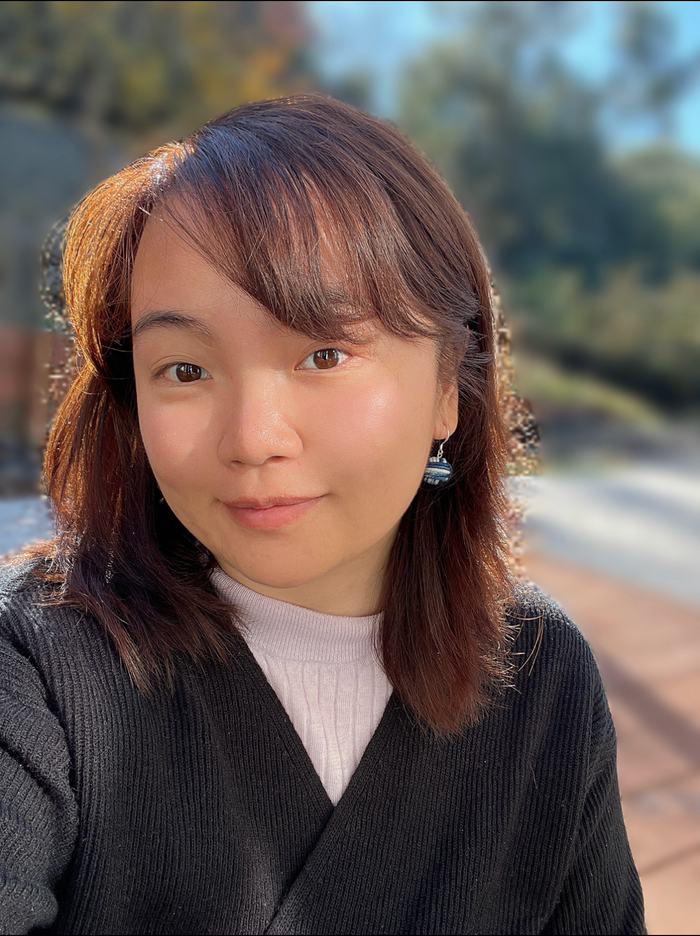
Her approach
Gentle, spacious,
and deeply human.
Shelley’s approach is shaped by her Asian heritage and a daily practice rooted in Buddhism and Daoism—meditation, breath, embodiment, and attention to the rhythms of the natural world.
She brings these lived traditions into conversation with Western psychology, cognitive science, and neuroscience. Her path has also been informed by study with Hu Yinmeng (Terry Hu), whose teaching weaves Eastern contemplative traditions with Western depth and transpersonal psychology.
One influence is the practice of reflective self-awareness: turning attention toward thoughts, feelings, body sensations, and patterned reactions as they arise—with curiosity rather than force. In Shelley’s work, this is not a fixed method, but an invitation to stay close to lived experience and bring insight back into ordinary life.
Rather than offering a formula or a promise of treatment, Shelley creates space for curiosity, self-regulation, compassionate inquiry, and meaningful change. Here, ancient practices become grounded experiments for daily life: noticing what is present, meeting emotions with care, listening to the body, and taking steps that align with what matters most.
Explore ways to work togetherFrom outer systems to inner self
We are life
in motion.
Always changing. Always becoming.
Long before Shelley had language for this work, she was drawing picture books, telling small fables, observing the natural world, and reading Eastern philosophy—from the Tao Te Ching to the Heart Sutra. She has always been sensitive to shifts in energy and atmosphere, and curious about the patterns of change that move through people, relationships, and the living world. Drawing was her first way of describing an inner landscape: moods, emotions, and the world as it appeared around her.
During her studies in mathematics, economics, and statistics, Shelley was drawn to the same question from different directions. Mathematics appealed to her as an elegant language for distilling patterns; economics offered a way to consider collective behavior and human psychology; and statistics and machine learning showed how historical information can illuminate possible future trends. Across all of these fields, she was quietly asking: where do I belong in this world, and how might what I learn be of use to others?
When her grandmother developed kidney failure during those years, that question became more immediate. It drew her toward healthcare, where she worked at Toronto’s Multi-Organ Transplant Program, helping researchers and surgical teams apply systems thinking and data to support patient care.
After coming to the United States for graduate school, Shelley followed the momentum of the data era and an inner pull toward new possibility to Silicon Valley. She spent a decade as an applied scientist in technology, including at Uber through its startup-to-public-company years. The work deepened her ability to understand complex systems, patterns, and practical change.
But her original curiosity was still there. As technology moved quickly around her, a quieter part of her was waiting to grow—longing for greater connection, humanity, and a life that felt fully inhabited. She kept returning to one question: What does a happy, fully nourished life look like—and can my work nurture me while helping others?
In the intensity of that chapter, time and space for inward work grew scarce. Burnout became a turning point: not the end of her curiosity, but a shift from seeking answers mainly in the outer world to listening for them within. In the liminal space between sleep and waking, Shelley heard a clear, quiet voice—her little inner voice—an experience she came to understand as her first spiritual awakening. She began a patient practice of soul searching through reflection, meditation, breathwork, emotional processing, spiritual practice, and art-therapy-informed techniques.
Through daily meditation, nourishment, movement, and a steady spiritual practice, she slowly found her center again. That path revealed something she now holds close: each of us carries remarkable inner capacities and resources to adapt, restore, and reshape a life that supports who we are becoming.
Inner work, in Shelley’s view, is not about fixing a broken self. It is a practice of clearing space—and choosing a life system: how you work, live, relate, and pursue what matters, in ways that continue to serve who you are becoming.
Background & training
Seeing through
new lenses.
Embracing new possibilities.
Education
School of Visual Arts — Art Therapy
Harvard Business School Executive Education — Leadership
Duke University — M.S. in Biostatistics
University of Toronto — B.S. in Applied Mathematics, Statistics & Economics